

Announcements
2025
04/18/2025—The Cowboy Microfabrication Corral (CMC) is excited to announce the acquisition of
a Quantum Design PPMS DynaCool®, a cryogen-free Physical Property Measurement System
that expands our ability to conduct high-precision experiments. With a 9 T magnet
and a dilution refrigerator enabling measurements down to 50 mK, the PPMS DynaCool
supports a wide range of studies, including electrical transport, magnetometry, and
thermal properties of advanced materials.
This versatile system is already driving new research in quantum materials and nanotechnology.
The PPMS DynaCool positions the CMC as a regional hub for materials characterization,
fostering collaborations with academia and industry. For more information or to schedule
measurements, contact Mohammad Hadidi. Learn more on the PPMS page.
2021
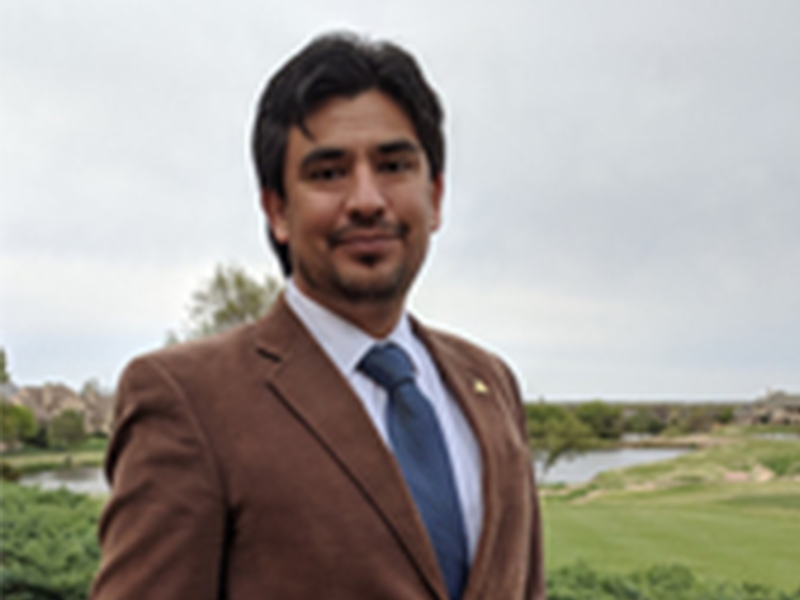 10/07/2021—Dr. Mario Borunda Elected to Presidential Line of the National Society
of Hispanic Physicists—The National Society of Hispanic Physicists has announced the election of Mario F.
Borunda, Associate Professor of Physics and Associate Director of the OKPVRI, to the
Presidential Line. Borunda begins his term as president-elect in September 2021 and
becomes full president in 2023. Congratulations Mario! NSHP is a nonprofit that represents
Hispanic and Latino physicists in higher education, national laboratories and industry
in the U.S. and across the world. Borunda has been in the board of directors of the
NSHP and hopes to continue developing and supporting efforts to increase opportunities
for Hispanics in physics and to increase the number of practicing Hispanic physicists,
particularly by encouraging Hispanic students to enter a career in physics.
10/07/2021—Dr. Mario Borunda Elected to Presidential Line of the National Society
of Hispanic Physicists—The National Society of Hispanic Physicists has announced the election of Mario F.
Borunda, Associate Professor of Physics and Associate Director of the OKPVRI, to the
Presidential Line. Borunda begins his term as president-elect in September 2021 and
becomes full president in 2023. Congratulations Mario! NSHP is a nonprofit that represents
Hispanic and Latino physicists in higher education, national laboratories and industry
in the U.S. and across the world. Borunda has been in the board of directors of the
NSHP and hopes to continue developing and supporting efforts to increase opportunities
for Hispanics in physics and to increase the number of practicing Hispanic physicists,
particularly by encouraging Hispanic students to enter a career in physics.
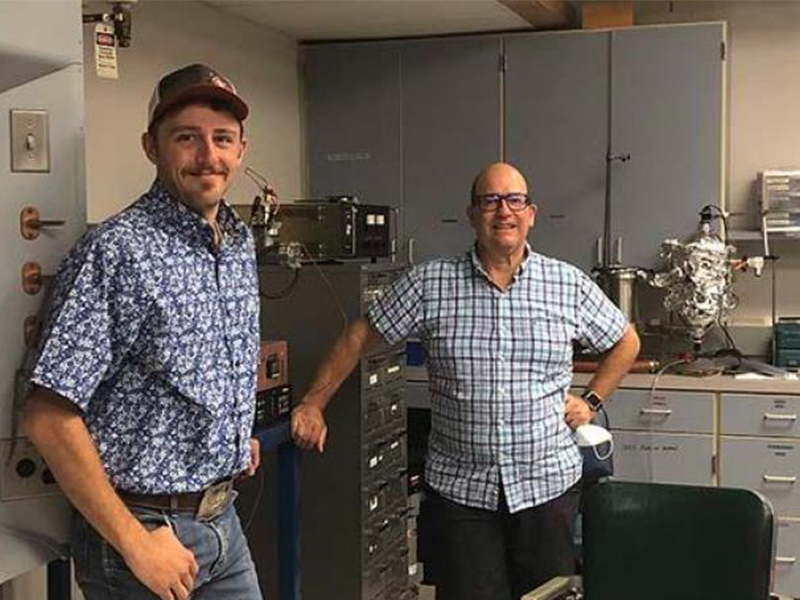 10/07/2021—McIlroy and O'Hara (ECE-CEAT) Awarded $540K AFOSR Grant—Dave McIlroy and his co-PI, John O'Hara (ECE-CEAT), have a new grant for $540k for
three years from the Air Force Office of Scientific Research. The project title is,
"Metamaterials for Nonlinear Coupling and Decoupling of Opto-Electronics and -Mechanical
Systems." The project has two components. The first is to develop metamaterials that
enhance non-linear coupling in the THz band of the electromagnetic spectrum. The second
component is to develop ways to decouple surface plasmon polaritons, as well as explore
ways to redirect photon momentum, in solar sails. While the two projects seem miles
apart, they involve similar materials and are complementary to one another.
10/07/2021—McIlroy and O'Hara (ECE-CEAT) Awarded $540K AFOSR Grant—Dave McIlroy and his co-PI, John O'Hara (ECE-CEAT), have a new grant for $540k for
three years from the Air Force Office of Scientific Research. The project title is,
"Metamaterials for Nonlinear Coupling and Decoupling of Opto-Electronics and -Mechanical
Systems." The project has two components. The first is to develop metamaterials that
enhance non-linear coupling in the THz band of the electromagnetic spectrum. The second
component is to develop ways to decouple surface plasmon polaritons, as well as explore
ways to redirect photon momentum, in solar sails. While the two projects seem miles
apart, they involve similar materials and are complementary to one another.
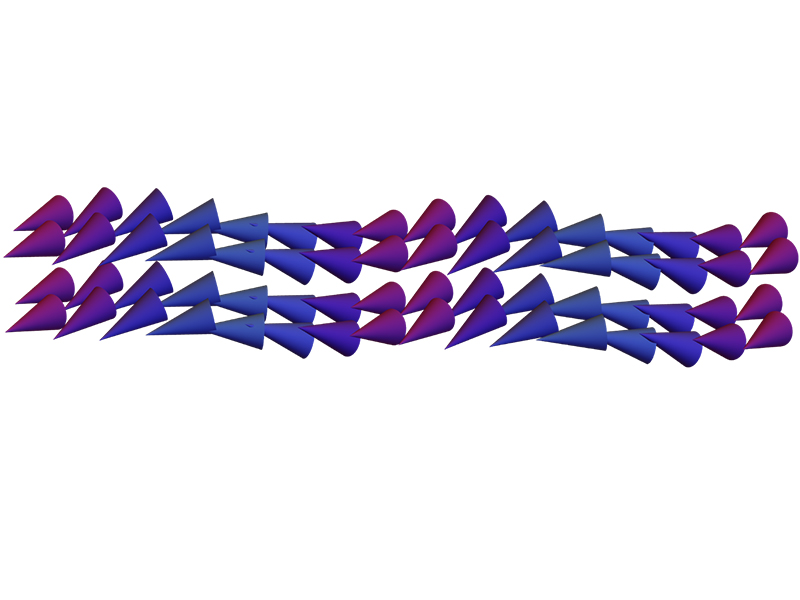 07/29/2021—OSU Team, Including Turgut, Receive AFOSR Instrument Grant—
AFOSR awarded a cutting-edge Terahertz spectroscopy system to an OSU team, including Emrah Turgut from Physics and their colleagues from Electrical and Computer Engineering. Terahertz spectrum is a rarely utilized electromagnetic spectrum lays between infrared and microwaves, two of which have been used in fiber and cellular communications extensively. On the other hand, the Terahertz spectrum offers faster communication speed for the future 6G and beyond networks. However, understanding of the material responses in this spectrum and fabrication of power-efficient devices is challenging. $95 Thousand support will be used to acquire the instrument that will enable research activities in novel material science, wireless communications, imaging, and electronics at Oklahoma State University. Particularly, Dr. Turgut will use the instrument to study high-frequency dynamics in chiral and anti-ferromagnetic materials. These studies will advance fundamental understanding of quantum materials and lead to faster and more power-efficient computing architectures.
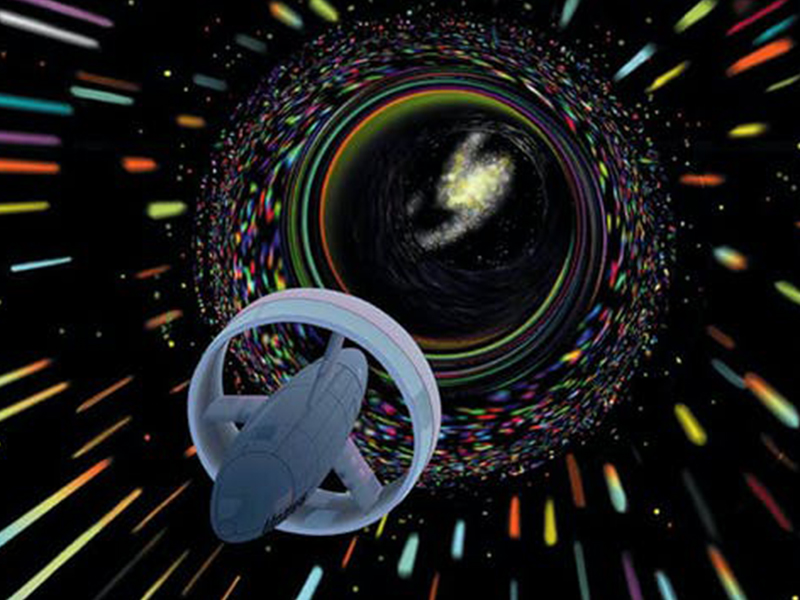 04/23/2021—Dr. Borunda was recently published in the Conversation—Dr. Mario Borunda from the Physics department was recently published in the Conversation.
Read his article on The Conversation website.
04/23/2021—Dr. Borunda was recently published in the Conversation—Dr. Mario Borunda from the Physics department was recently published in the Conversation.
Read his article on The Conversation website.
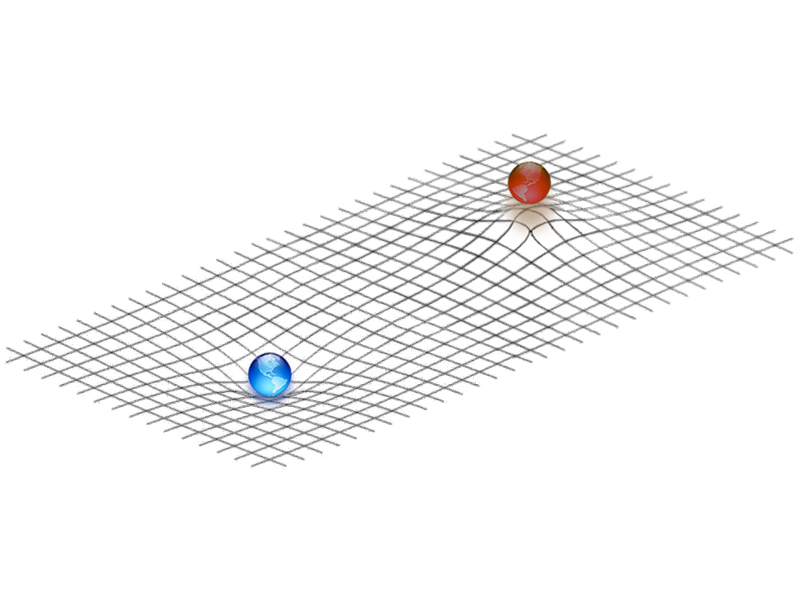 04/23/2021—Dr. Borunda helped teach kids about gravity—Physics Professor Mario Borunda helped teach kids about gravity in a piece for The
Conversation's Curious Kids series. Read his article on The Conversation website.
04/23/2021—Dr. Borunda helped teach kids about gravity—Physics Professor Mario Borunda helped teach kids about gravity in a piece for The
Conversation's Curious Kids series. Read his article on The Conversation website.
2020
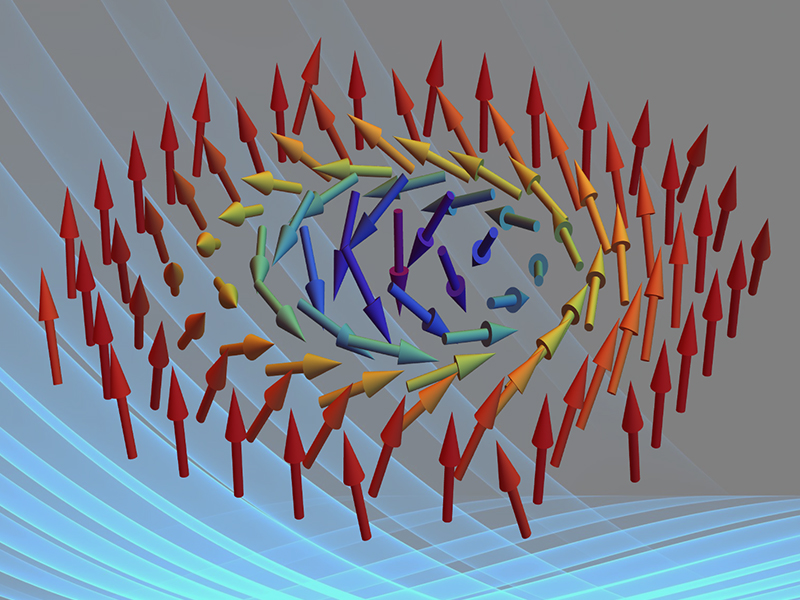 08/14/2020—OSU Team, Including Turgut and Meyers, Receive NSF Instrument Grant—The National Science Foundation awarded a cutting-edge Terahertz spectroscopy system
to an OSU team, including Emrah Turgut and Derek Meyers from Physics and their colleagues
from Electrical and Computer Engineering. Terahertz spectrum is a rarely utilized
electromagnetic spectrum lays between infrared and microwaves, two of which have been
used in fiber and cellular communications extensively. On the other hand, the Terahertz
spectrum offers faster communication speed for the future 6G and beyond networks.
However, understanding the material responses in this spectrum and fabrication of
power-efficient devices is challenging.
08/14/2020—OSU Team, Including Turgut and Meyers, Receive NSF Instrument Grant—The National Science Foundation awarded a cutting-edge Terahertz spectroscopy system
to an OSU team, including Emrah Turgut and Derek Meyers from Physics and their colleagues
from Electrical and Computer Engineering. Terahertz spectrum is a rarely utilized
electromagnetic spectrum lays between infrared and microwaves, two of which have been
used in fiber and cellular communications extensively. On the other hand, the Terahertz
spectrum offers faster communication speed for the future 6G and beyond networks.
However, understanding the material responses in this spectrum and fabrication of
power-efficient devices is challenging.
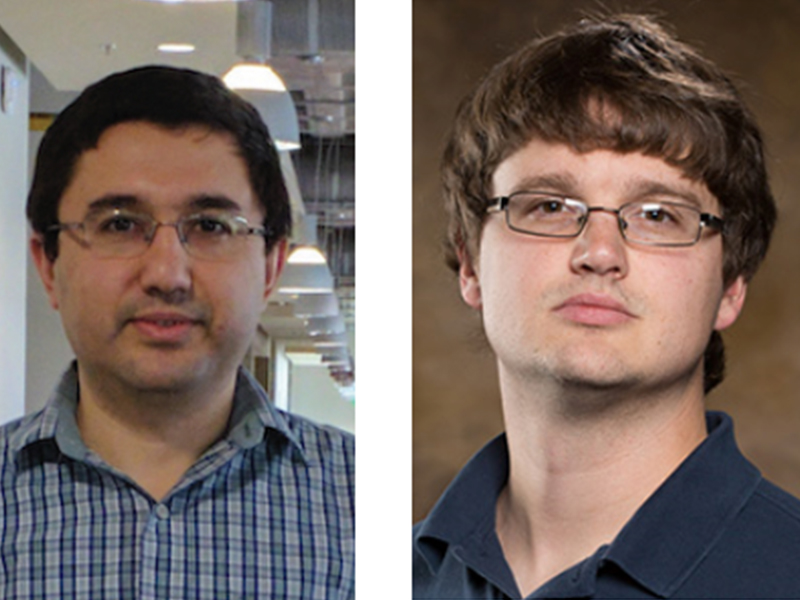 $603 Thousand support will be used to acquire the instrument that will enable research
activities in novel material science, wireless communications, imaging, and electronics
at Oklahoma State University and neighboring universities. Particularly, Dr. Turgut
and Dr. Meyers will use the instrument to study high-frequency quasiparticle dynamics
in chiral and anti-ferromagnetic materials, spin-Hall auto-oscillators, and resonance
spin-wave spectroscopy. These studies will advance fundamental understanding of quantum
materials and lead to faster and more power-efficient computing architectures.
$603 Thousand support will be used to acquire the instrument that will enable research
activities in novel material science, wireless communications, imaging, and electronics
at Oklahoma State University and neighboring universities. Particularly, Dr. Turgut
and Dr. Meyers will use the instrument to study high-frequency quasiparticle dynamics
in chiral and anti-ferromagnetic materials, spin-Hall auto-oscillators, and resonance
spin-wave spectroscopy. These studies will advance fundamental understanding of quantum
materials and lead to faster and more power-efficient computing architectures.
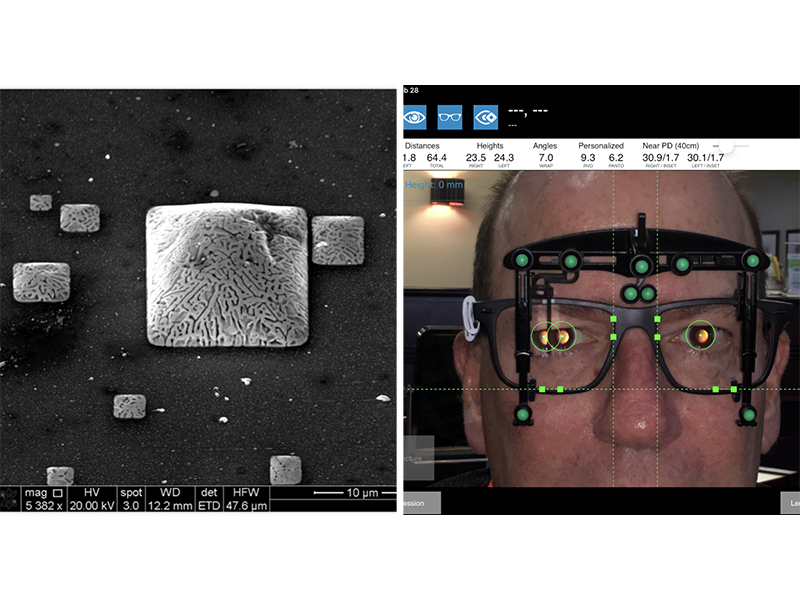 05/26/2020—Dr. David McIlroy Receives ONR Grant—Dave McIlroy has received a grant from the Department of Defense, Office of Naval
Research, to study the fundamental properties of hybrid metamaterials consisting of
gold mesoscopic structures and wide bandgap semiconductors for the purpose of enhancing
the electrical responses of sensors to the presence of airborne analytes, such as
the signatures of explosives. The project is entitled, “Surface Plasmon Polariton
Pumped Explosives.” It is a three-year project with a budget of $426,642 that will
support two graduate students, an undergraduate, and the associated costs of the research.
05/26/2020—Dr. David McIlroy Receives ONR Grant—Dave McIlroy has received a grant from the Department of Defense, Office of Naval
Research, to study the fundamental properties of hybrid metamaterials consisting of
gold mesoscopic structures and wide bandgap semiconductors for the purpose of enhancing
the electrical responses of sensors to the presence of airborne analytes, such as
the signatures of explosives. The project is entitled, “Surface Plasmon Polariton
Pumped Explosives.” It is a three-year project with a budget of $426,642 that will
support two graduate students, an undergraduate, and the associated costs of the research.