

Oklahoma Heritage Plants
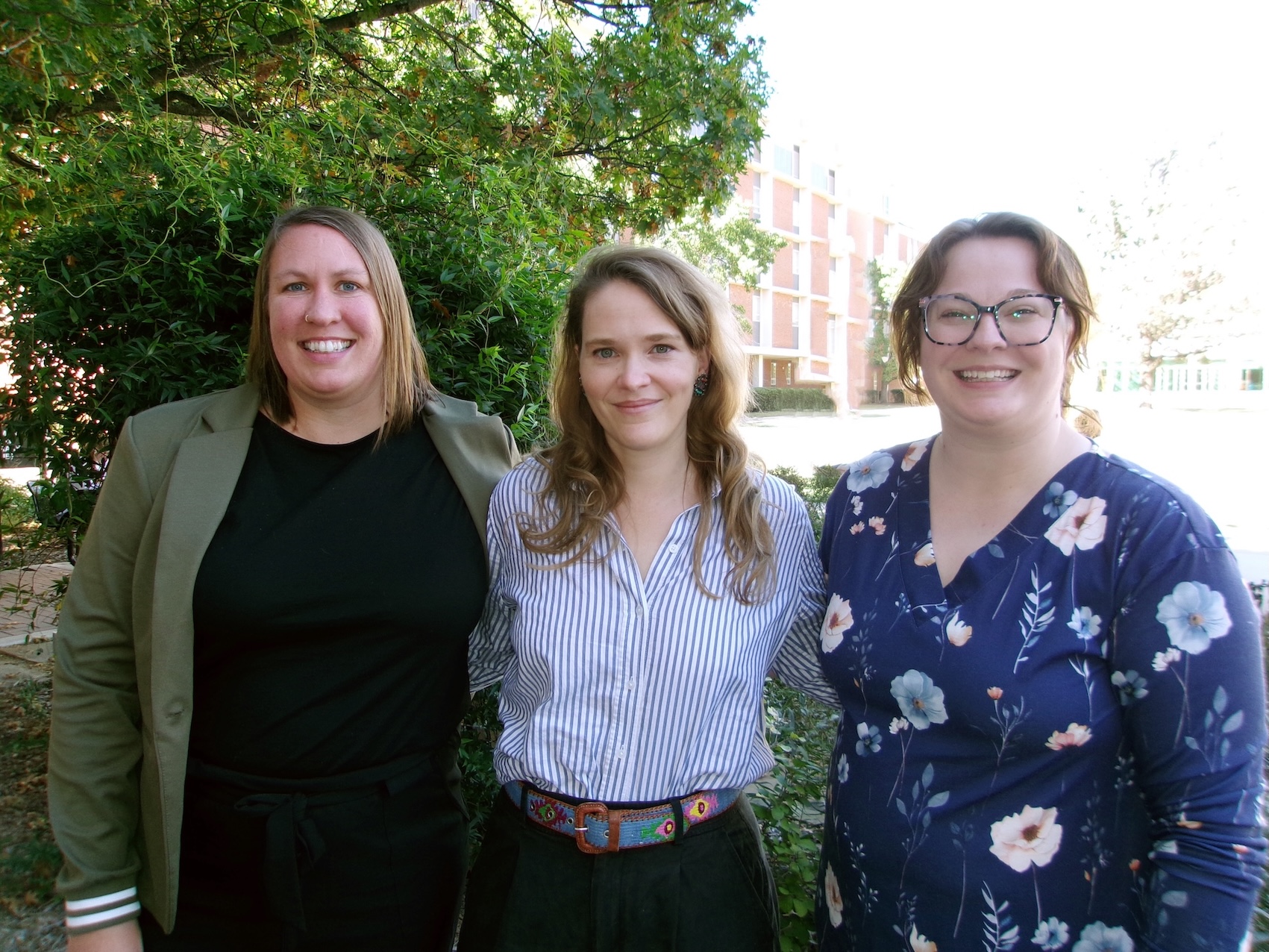
Oklahoma Heritage Plants Humanities Members
- Lindsey Abernathy, Educational Leadership & Policy Studies
- Dr. Kathleen Burns, English and American Studies
- Madelyn Powers, History
Abstract
Introduction
This project explores Oklahoma heritage plants, or plants with historical and cultural significance to Oklahoma, and to the region that would become Oklahoma. By learning from Oklahoma heritage plants, this project seeks to illuminate the ways that these plants’ social and ecological histories have shaped and been shaped by diverse Indigenous, Black, and settler agricultural and gathering practices on the Southern Plains. The primary outcome will be a digital public humanities project. To produce this work, our team will conduct archival analysis of written documents and herbaria, engage with oral histories, and draw upon a wide array of cultural objects, primary, and secondary sources to investigate the cultural and agricultural diversity of Oklahoma, particularly the environmental knowledges that have shaped the Southern Plains. Ultimately, this project reorients dominant historical narratives of agricultural production in Oklahoma that center settler land acquisition to instead highlight diverse models of environmental stewardship.
Description
Our project explores the cultural legacies and histories of food production in Oklahoma, with a specific emphasis on Oklahoma heritage plants. Heritage plants are often associated with heirloom cultivars or varieties passed down through generations. Our project is less concerned with specific cultivars, or plant strains, and more interested in plants with historical and cultural significance to Oklahoma, and to the region that would become Oklahoma. Some are native to the region, while others are transplanted, but they all carry a cultural legacy through the stories, histories, and agricultural knowledges they seed and foster. These plants’ social and ecological histories have shaped and been shaped by diverse Indigenous, Black, and settler agricultural and gathering practices on the Southern Plains. Within our preliminary research, we explored the cultural and historical significance of such plants as prairie turnips or timpsila, buffalo gourds, wild strawberries, and cowpeas to showcase the cultural and agricultural diversity of Oklahoma, particularly the environmental knowledges that have shaped the Southern Plains.
Because these foods are so central to the diverse communities of Oklahoma, our group seeks to create a project that amplifies their role within a land-grant university. Not only does the experimental station of OSU—and its antecedent of Oklahoma Agricultural & Mechanical College—have historical ties to these plants, but they are also central to the institution’s mission. One of Oklahoma State University’s stated land-grant priorities is “innovating to nourish the world.” Nourishing the world certainly includes food security, which ensures that communities have reliable access to sufficient, nutritious, and healthy food. But nourishing the world also goes beyond sustenance to include food such as heritage plants that foster health and growth by feeding the cultural and historical life of a community.
Anticipated deliverables
To ensure the stories of these heritage plants reach a broader OSU audience, our team will develop a public-facing digital humanities project that will include interpretive materials and experiential teaching modules. Institutionally, the digital public humanities project will act as a visible and public-facing embodiment of OSU’s land-grant mission of community engagement, expanding it beyond economic productivity to include cultural sustainability, environmental justice, and ecological restoration.