News
News About Fox Lab
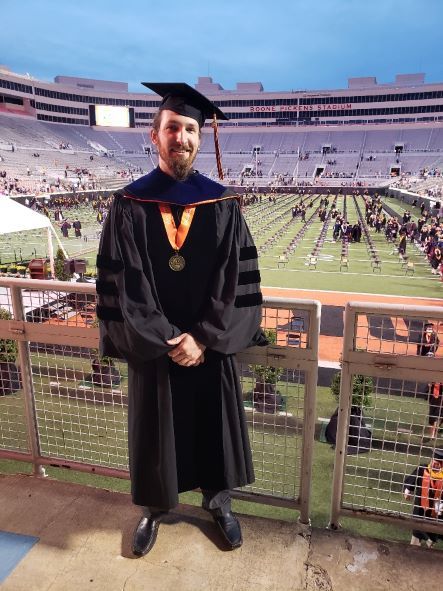
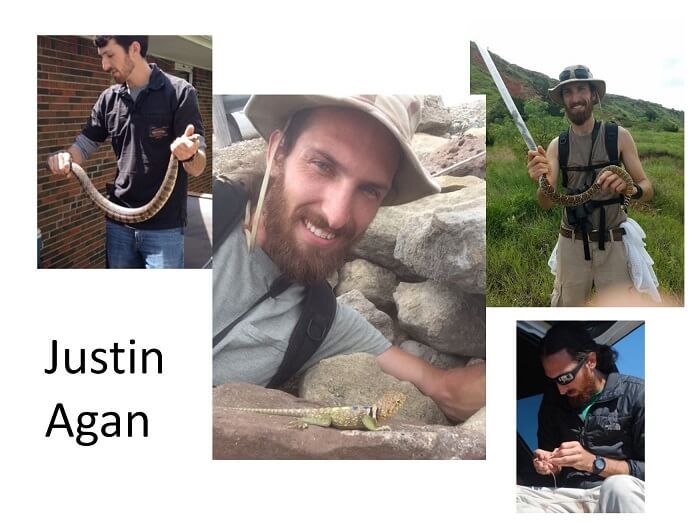
Justin Agan graduates as a PhD
Jaina Agan completed her doctoral degree in the summer of 2021 and is now Dr. Agan. She tells everyone that she is finally a Dragan. HaHa. Currently, Jaina is now a tenure-track Assistant Professor in the Department of Biology at the University of Central Oklahoma. She is busy submitting manuscipts from her dissertation to peer-reviewed journals. Good Luck, Jaina!
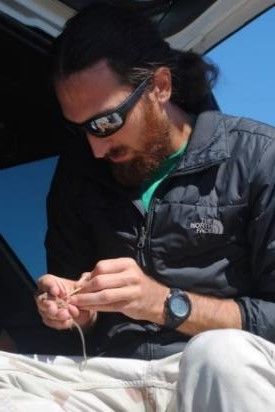
Justin Agan receives SWAN's most prestigious student award
Doctoral candidate Jaina Agan won the Wilks Award at the recent 2021 Annual Meeting. The Wilks Award is given for the best oral paper presented by a student. It, along with the Student Field Natural History Award, is the most prestigious student award that SWAN makes each year. Jaina is the third student from the Fox Lab to win this award and the fifth from Oklahoma State University. Congrats, Jaina!
Past doctoral student gets married, starts a new job, and changes his zip code
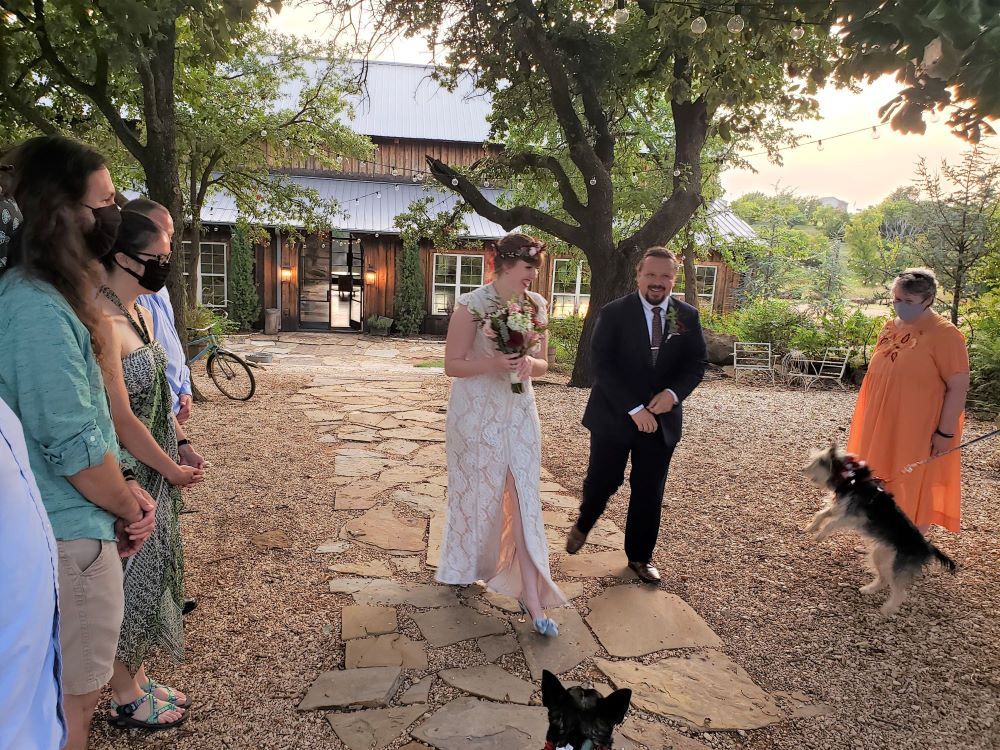
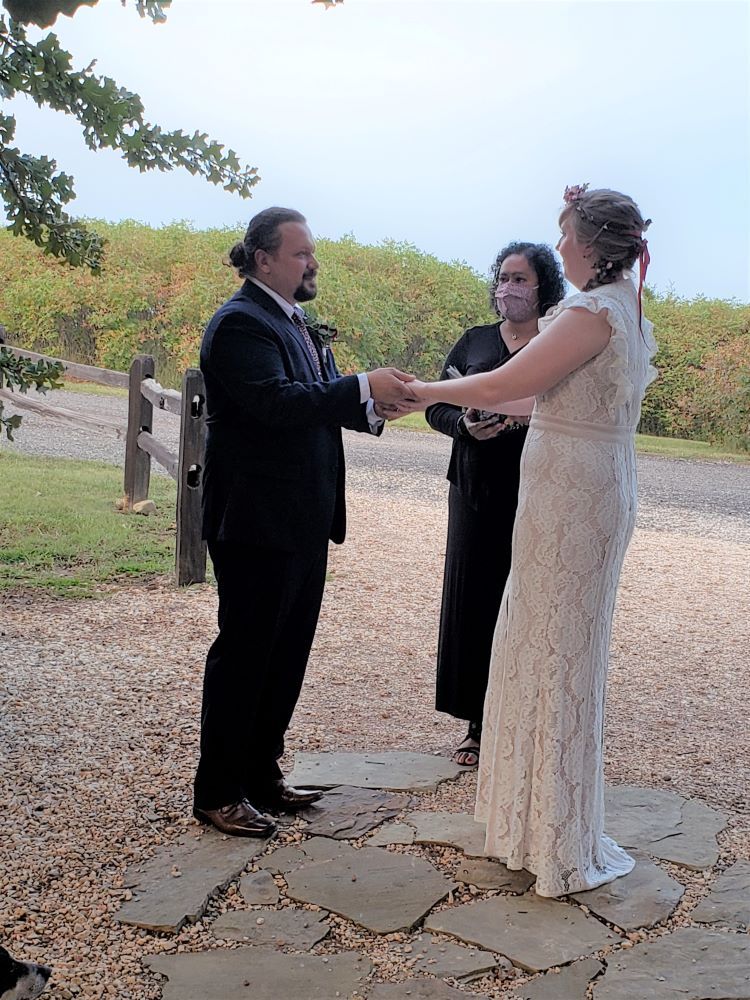
Enrique Santoyo-Brito, Ph.D. from the Fox lab in 2017, just got married to fellow graduate student in the Department of Integrative Biology, Carrie Klase, has a job at the University of Illinois, and has moved to Urbana, IL. Lots of life-changing events, all positive, well, except that for the time being, Carrie is not moving with him to Urbana. Enrique is working in the Prairie Research Institute at the University of Illinois as a Scientific Specialist in the Biological Collections. His major responsibilities are to plan and implement the full integration of the SIUC (Southern Illinois University at Carbondale) fluid vertebrate collection into the Prairie Research Institute Biological Collections.
Justin is the Best
Jaina Agan received the Departmental Outstanding PhD Award from Integrative Biology when she graduated in 2021. She is the sixth student to win this honor in the history of the Fox Lab. Congratulations Jaina and the Fox Lab!
Recent publications from Fox lab
2023 Fox, S. Invited contribution to the blog of Youth Geographic Association in honor of World Lizard Day, 14 August 2023. https://youthgeo.org/world-lizard-day-qa-dr-stanley-fox/
2023 Wiggins, J.M., J. Landers, J. W. Agan, and S. F. Fox. When do Young Collared Lizards (Crotaphytus collaris) First Copulate with and Fertilize Females? Herpetologica, 79(2): 91–97. URL: https://doi.org/10.1655/Herpetologica-D-22-00039
2023 Carlson, T., E. Cabrera-Guzmán and S. Fox. Explosive Fall Breeding of the Ringed Salamander (Ambystoma annulatum) in the Ozark Plateau of Oklahoma, USA. Southwestern Naturalist, 67(2): 87-94. URL: https://doi.org/10.1894/0038-4909-67.2.87
"Bad Moms" article by National Geographic features Fox and Santoyo-Brito's research on Chilean lizard
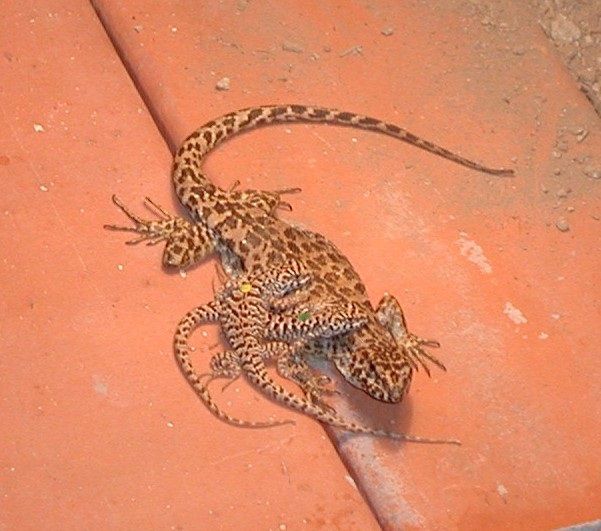
National Geographic recently posted an article on their website featuring Bad Moms in nature, which summarized how bad the Leopard Tree Iguana (Liolaemus leopardinus) mothers are. Of course, they are bad only by crude human standards. They are wonderfully adapted to their environment according to research by Stanley Fox and past student Enrique Santoyo-Brito.
Jodie Wiggins becomes PhD
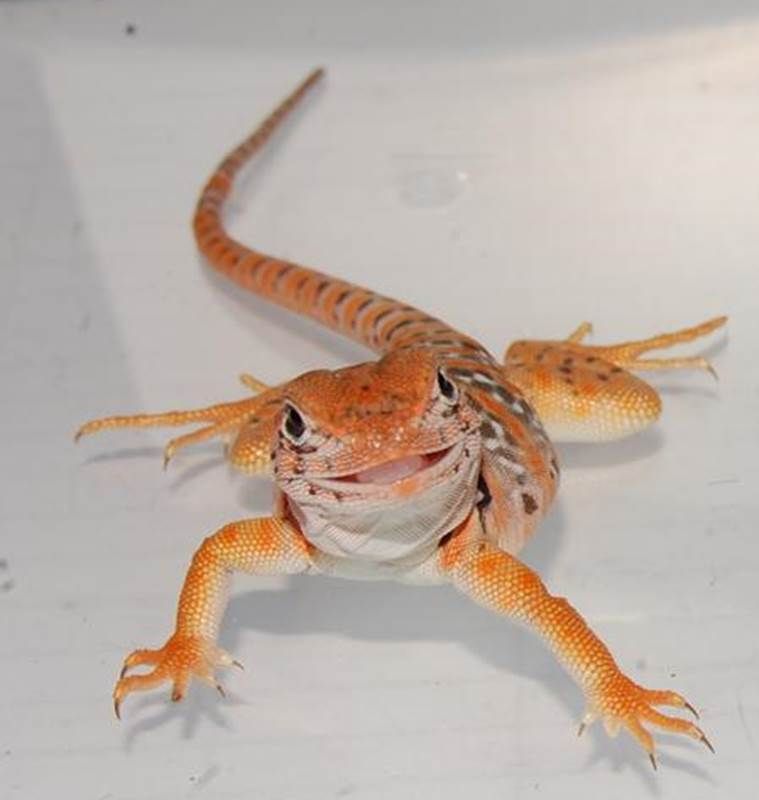
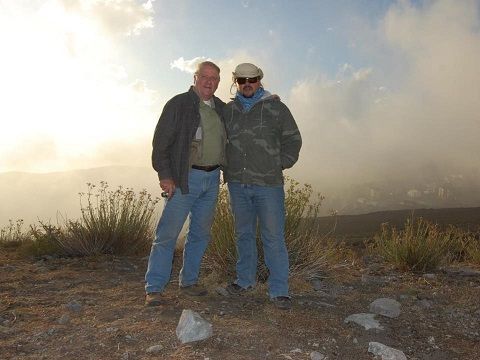
Jodie Wiggins, a doctoral student in the Fox Lab coadvised by Fox and Lovern, graduated in July, 2018, with a PhD. Jodie worked on the research of precocial sexual selection in the Collared Lizard, and produced an outstanding dissertation documenting that male hatdchlings with brighter Hatchling Orange Bars (HOB) postumously produced more offspring, those with greater HOB area had a greater posthumous chance of producing offspring at all, hatchling females significantly preferred to associate with male hatchlings with brighter HOB, and hatchling males with greater HOB area were more aggressive than their counterparts with less ornamentation. In short, all the elements of sexual selection, but in hatchlings, what we call Precocial Sexual Selection. Congratulations, Jodie!
Great grad seminar over Losos's "Improbable Destinies"
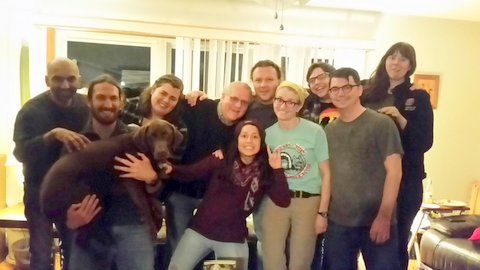
In April 2018 Fox et al. finished up a very successful graduate seminar reading and discussing the book "Improbable Destinies" by Jonathan Losos. Great group!
Enrique Santoyo-Brito graduates with PhD
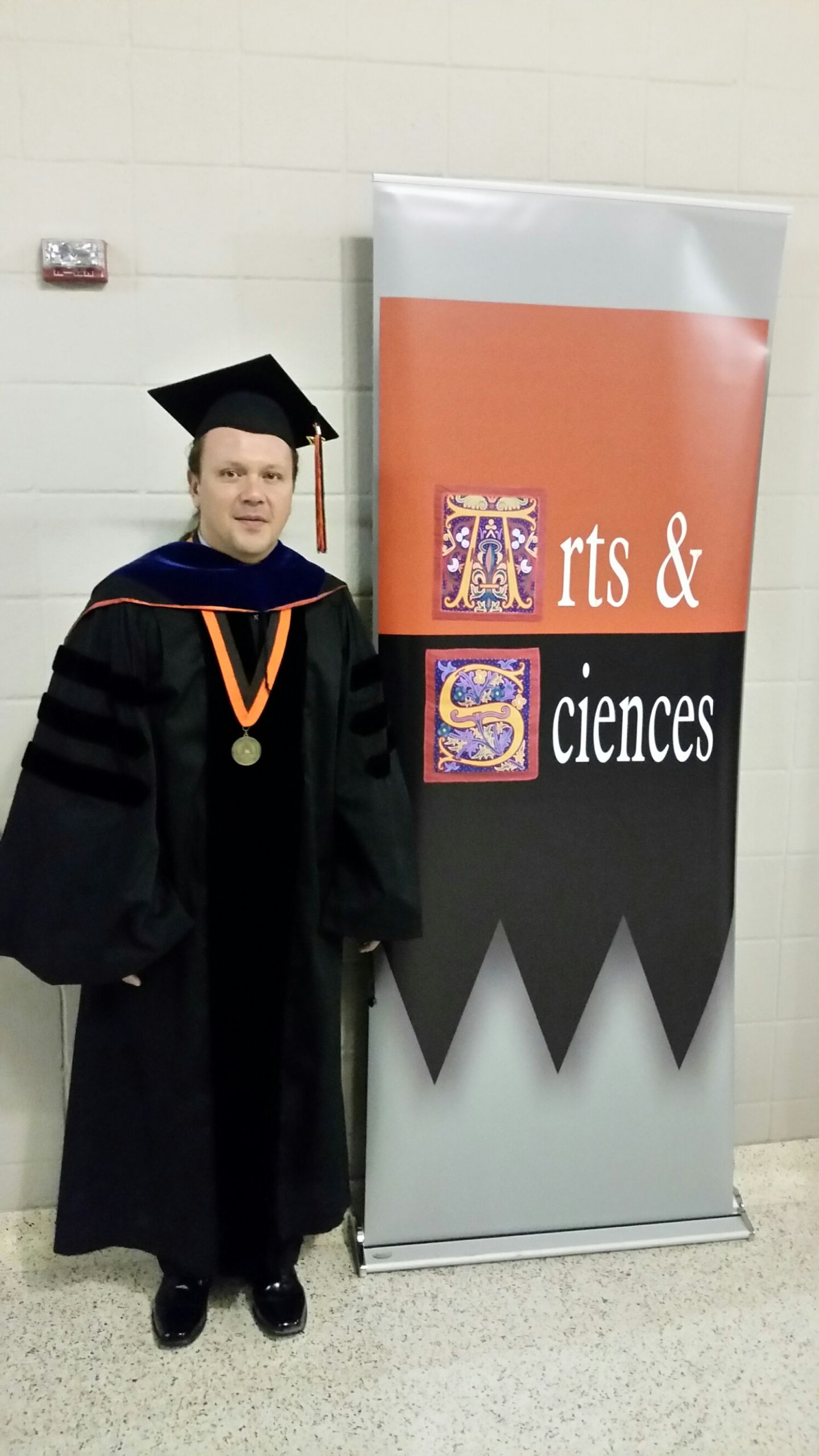
Enrique Santoyo-Brito of the Fox lab graduates in December 2017. Felicidades Enrique! The title of his dissertation is "Group living, parental care, age structure, and genetic relatedness in Liolaemus leopardinus, a high-elevation lizard from the Andes of Chile"
Fox wins SWAN award
Dr. Stanley Fox was presented with the Donald W. Tinkle Research Excellence Award at the annual meeting of The Southwestern Association of Naturalists (SWAN) held at Oklahoma State University, April 17-20, 2014. This distinguished award is presented to a member who, in the past 10 years, has made a significant contribution to the knowledge and understanding of the biota of the southwestern United States, Mexico, and Central America through scientific articles and books. Stanley was also the Co-Chair of the Local Committee hosting the meeting.
Zoology team awarded $500,000 NSF grant
Stanley Fox, Jennifer Grindstaff, Matthew Lovern, and Ronald Van Den Bussche, in the OSU Department of Zoology, received a $500,000 grant from The National Science Foundation to study development of sexual selection. In many animal species, males and females are different in appearance and behavior and these differences usually arise about the time of puberty, when hormone changes occur. However, it's possible these sexual differences could develop earlier in life as long as the advantages of the differences are expressed later, as adults, in gaining mates. This early, pre-reproductive expression of sexual differences (and the later advantages) has not been the subject of much study.
In one excellent case, hatchling male collared lizards that are setting up their territories develop a bright orange color signal and treat other hatchling males aggressively and hatchling females non-aggressively. These young males begin to pair bond with young females as future mates and repel young males as future mate rivals. This study uses biochemical, genetic, molecular, and field experimental approaches to document the hormones responsible for the development of the early sexual differences in this species, and the genetic advantages expressed later in life. Possible costs due to increased conspicuousness and potential negative effects on immune function are also measured. This species is a model for the study of this phenomenon, and results could apply broadly, even to humans. The research should spur more investigation of early sexual differentiation and plant a paradigm shift in evolutionary ecology, as precocial sexual selection. Also see a recent press release for the project here and here.